
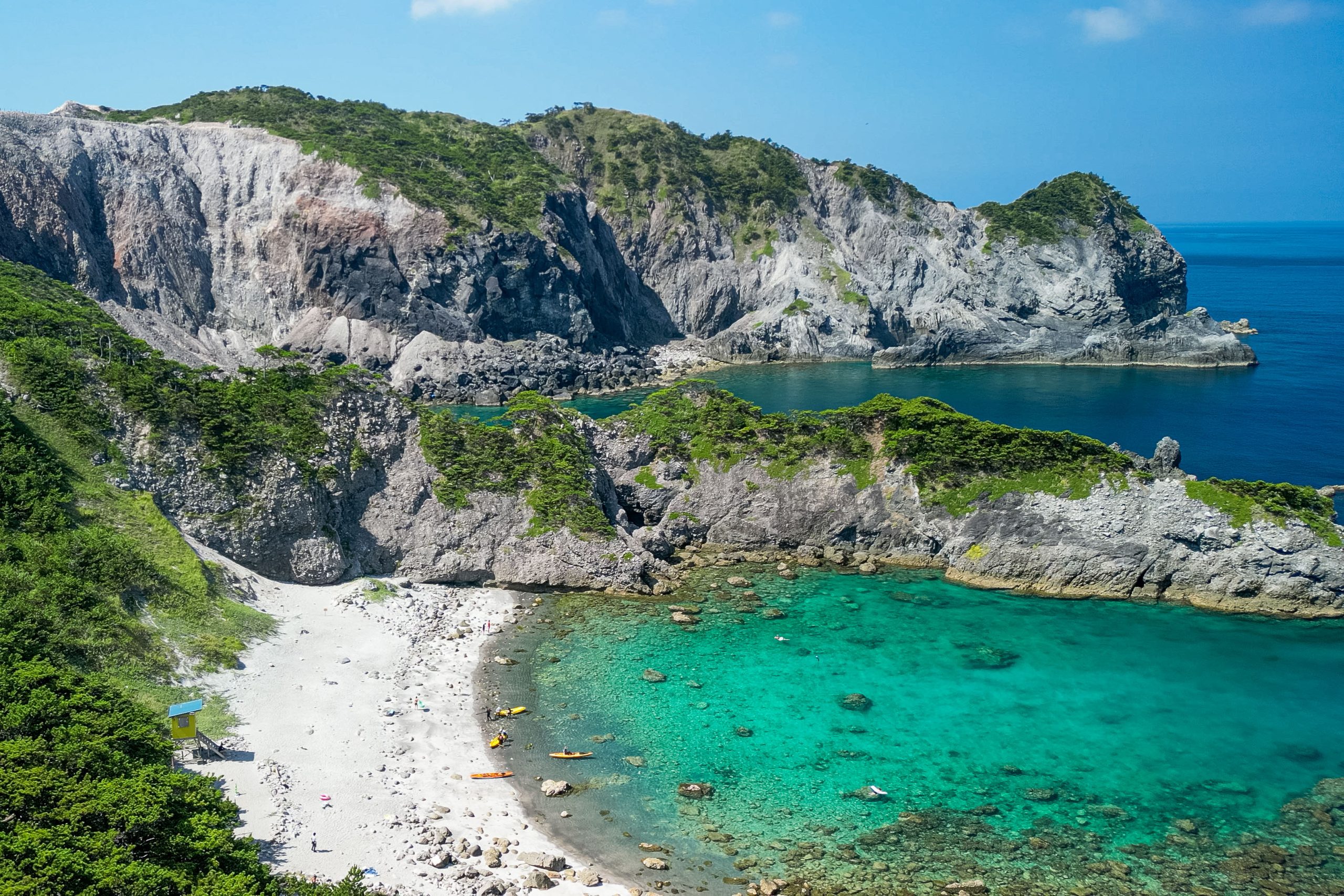
Springs, Sea, Sky, and Shrines: The Spirit of Shikinejima Island
Uncovering the Hidden Beauty of Tokyo’s Tropical Island Gem
Tucked between the larger, more frequently visited islands of Niijima and Kozushima, Tokyo’s smaller island paradise of Shikinejima is often overshadowed by its neighbors. Yet it is precisely this quiet obscurity that makes it such a hidden gem. Measuring just 3.9 square kilometers, the island is compact, easy to reach, and generously rewards those who venture here with unforgettable adventures, local charm, and new discoveries. Visit for yourself, and you’ll soon see how its identity is shaped as much by its landscapes as by its legends.
By day, Shikinejima’s natural springs, lagoons, and sparkling coastline connect visitors to the sand, salt, and surf. By night, its elevated viewpoints and rugged cliffs offer breathtaking opportunities for both island and stargazing, linking visitors to the vastness of the sea below and the sky above. Much like its name, many of Shikinejima’s signature seaside experiences begin with the letter “S”: swimming, snorkeling, scuba diving, springs, stargazing, and shrine visits. Together, they can be distilled into four defining elements—Springs, Sea, Sky, and Sacred Sites.
Each of these elements is central to island life and to fully experiencing what Shikinejima has to offer. Together, they tell the story of the island’s centuries-old past—including its long history of habitation and its mysterious affinity for cats, whose presence is woven into local folklore.
Springs
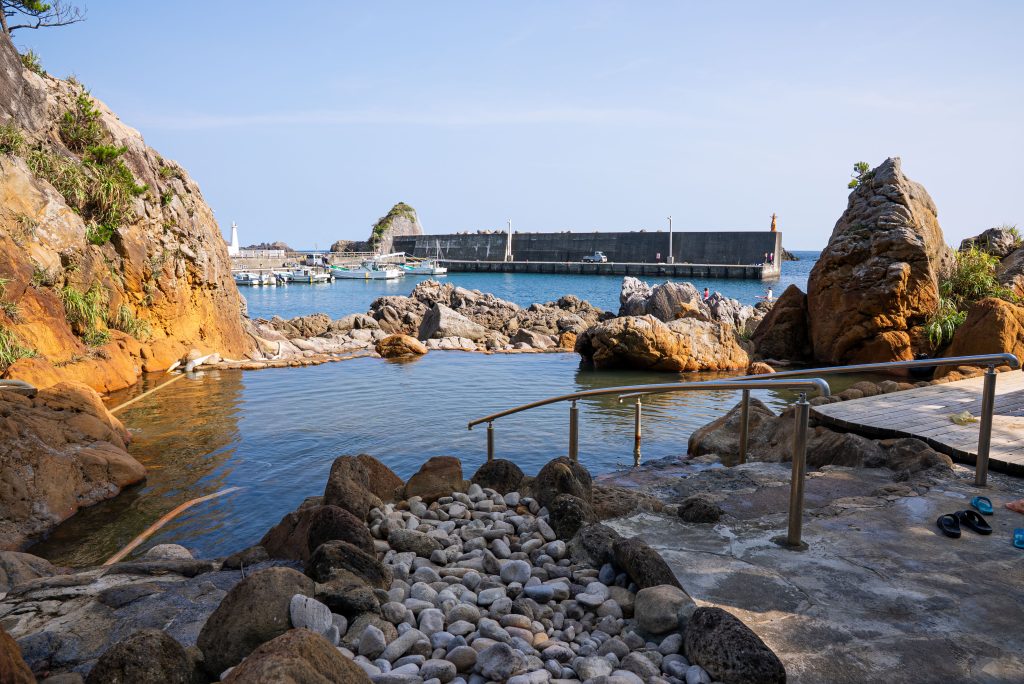
Spring Hopping on Shikinejima
Shikinejima feels wild and untouched, yet it’s remarkably easy to explore. It’s a place where every winding road leads to a quiet cove, a dramatic cliff, or a hidden beach, making the journey itself part of the adventure.
What truly captivates visitors, however, are its natural seaside springs, which are among the island’s most iconic features. As a volcanic island, Shikinejima’s unique geography allows geothermal heat to warm mineral-rich groundwater that bubbles up through rocky pools along the shoreline. This rare fusion of spring and sea is unusual in Japan, where most hot springs are located inland. Here, it defines the island’s identity, earning Shikinejima recognition as one of Japan’s few genuine natural hot spring islands.
Set against a backdrop of rolling waves, three spring sites in particular form the heart of local life, drawing both residents and travelers in search of the quintessential Shikinejima experience.
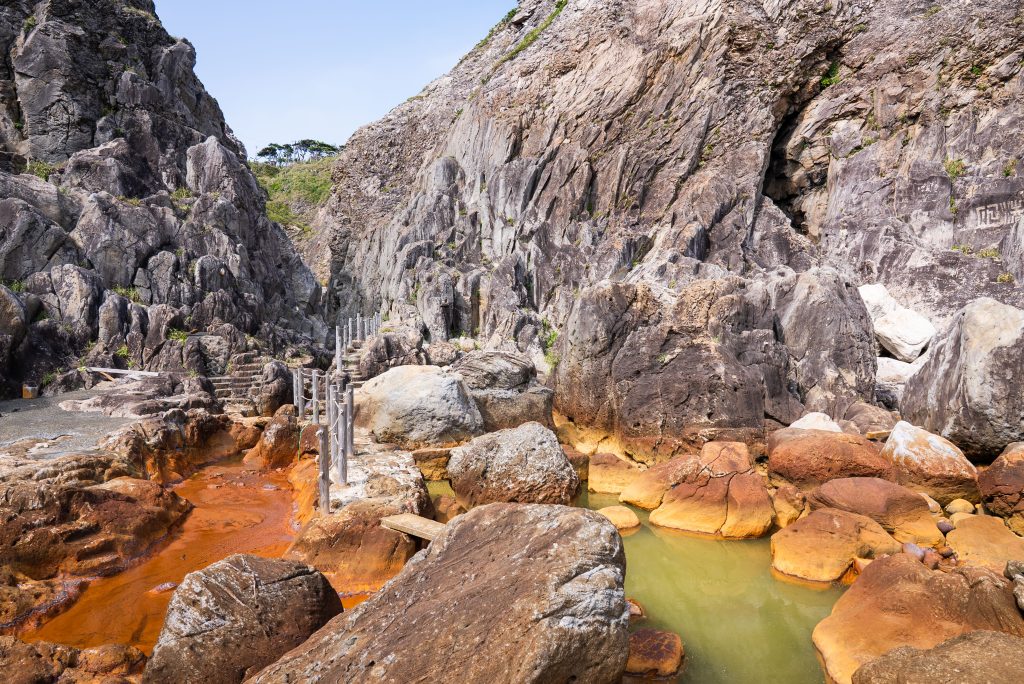
Jinata Onsen
Jinata Onsen is one of Shikinejima’s most unforgettable experiences—a wild, open-air spring on the island’s southern coast that you can often smell before you even see it. The sulfur-tinged waters shimmer bronze and carry a soothing mineral scent, long celebrated for their therapeutic properties. The baths, naturally carved into the rocks at the water’s edge, offer a sense of seclusion and serenity, with ocean waves lapping close by.
Because the pools are directly connected to the sea, their temperature changes with the tides. Before stepping in, always test the water first: at low tide, some pools can reach a scalding 80°C, while at high tide, the cooler ocean currents make them comfortably warm. Experiencing Jinata Onsen is as much about tuning into the rhythm of nature as it is about soaking—the ebb and flow of the tide, the mineral scent, and the gentle roar of the waves all merge into a deeply calming moment that feels distinctly Shikinejima.
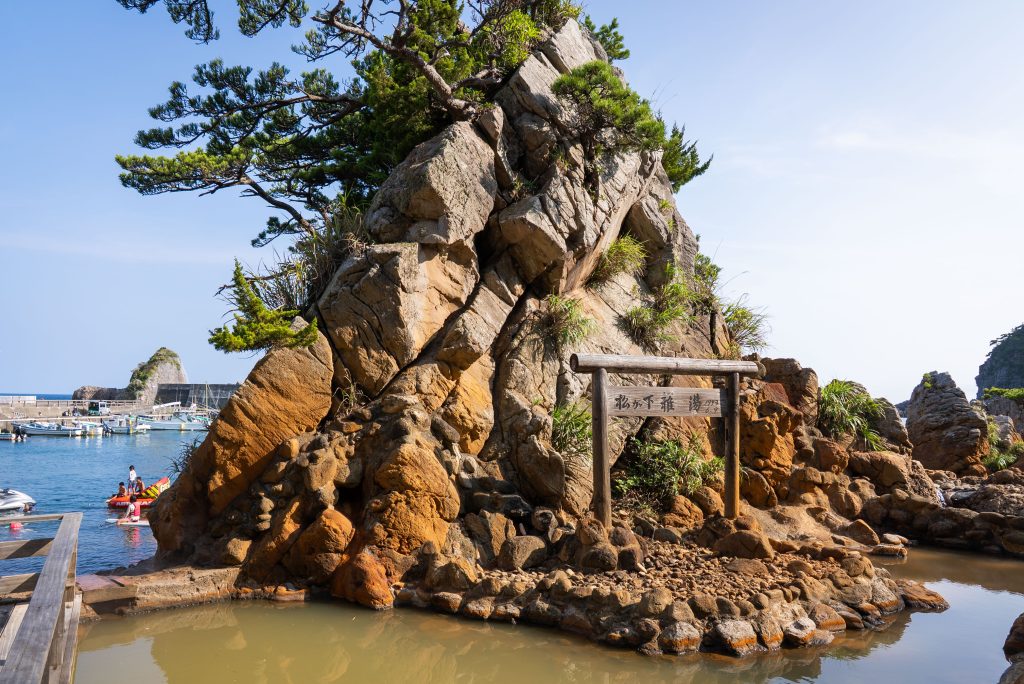
Matsugashita Miyabiyu Onsen
Tucked along Shikinejima’s eastern coast, Matsugashita Miyabiyu Onsen feels like a hidden treasure waiting to be discovered. The waters here originate from nearby Jinata Onsen, but are naturally tempered, making them comfortable for bathing no matter the tide. Even more special, it’s completely free, open 24 hours a day, and softly illuminated at night. Slip into the warm water as the stars shimmer above and the gentle rhythm of waves forms the perfect soundtrack. It’s the kind of place where time seems to slow down.
If you have a chance to chat with locals soaking beside you, they’ll tell you how much the community cherishes this spring—regularly maintaining it and keeping it clean for everyone to enjoy. Thanks to their care and the tranquil seaside setting, Matsugashita Miyabiyu Onsen is more than just a bathing spot. It’s a place to pause, breathe deeply, and feel completely at peace. For anyone seeking the island’s most relaxing experience, this is a memory that lingers long after you leave.
Ashitsuki Hot Spring
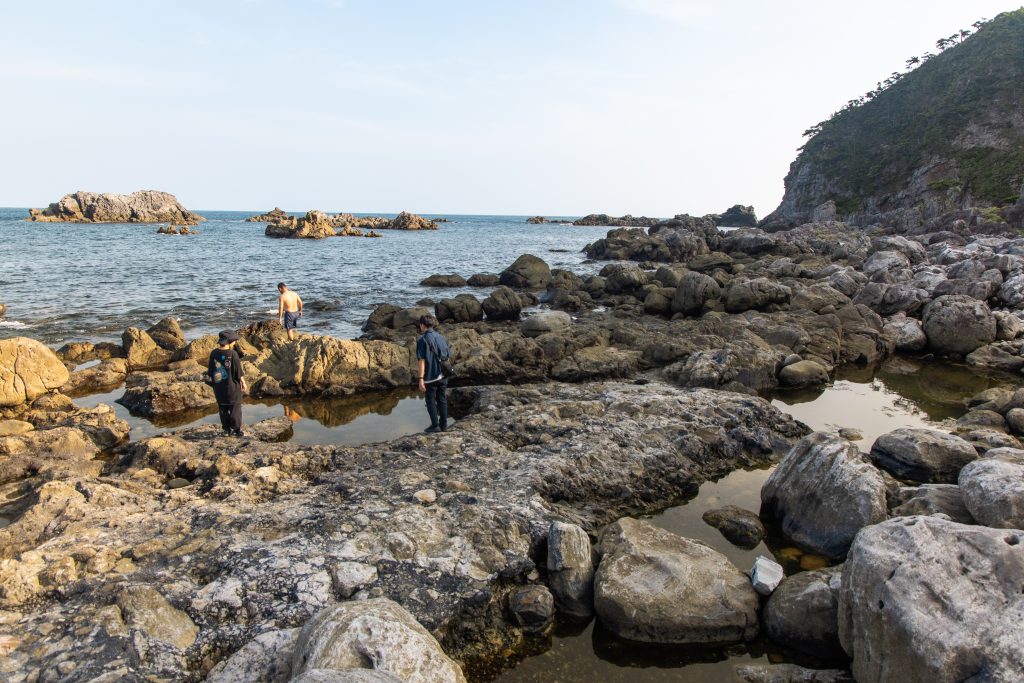
Just a short walk from Matsugashita Miyabiyu Onsen, Ashitsuki Hot Spring rests along the rocky shoreline—a quiet, open-air bath that feels worlds away from daily life. Known for its clear, mineral-rich waters said to heal cuts and wounds, the spring takes its name from a local legend: ashitsuki, meaning “foot dipping,” refers to a sea lion that once healed its injured flipper by bathing here.
Soaking in the pools with the vast ocean stretching out before you brings an immediate sense of peace and reflection. It’s common to see local families gathered together in the water after an ocean swim, enjoying the warmth and stillness. Like Jinata Onsen, Ashitsuki’s temperature shifts with the tides, and finding your favorite warm spot becomes part of the fun.
Sea
Kayaking Experience with Shikinejima Sea Kayak School
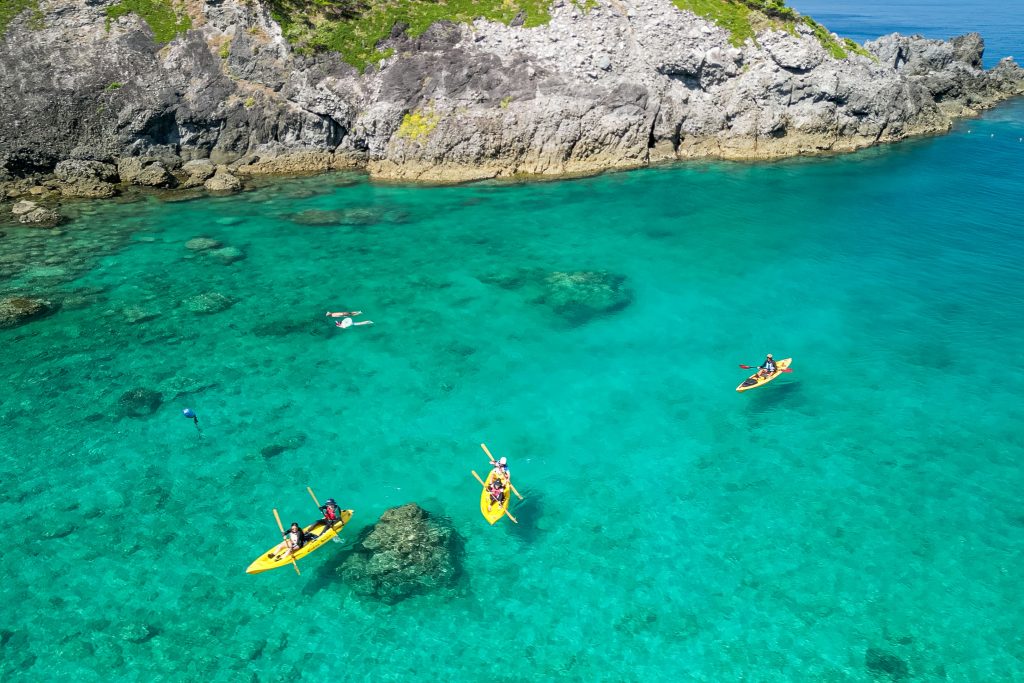
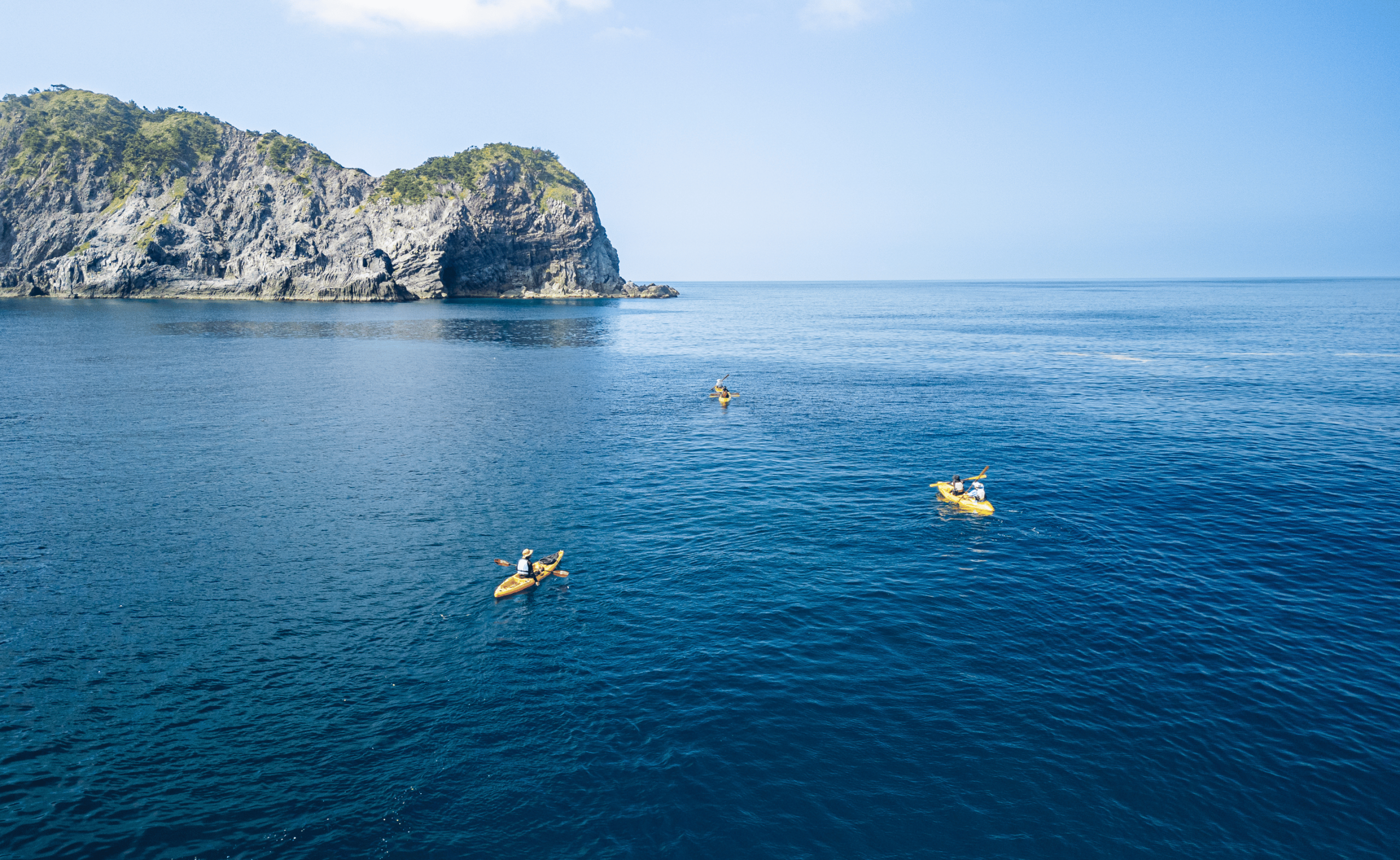
The Shikinejima Sea Kayak School offers guided tours around the island, giving visitors the chance to explore its rugged coastline and impossibly clear waters. Suitable for all skill levels, from first-timers to seasoned paddlers, the tours are led by locals who know these shores and currents as well as their own backyard.
You’ll glide past secluded beaches, weave through rocky coves, and come face-to-face with tropical fish and sea turtles. Midway through, the tour stops at Nakanoura Beach, where guides help participants feed fish by hand and snorkel along the shallows.
This immersive, two-in-one experience reveals Shikinejima’s beauty from both above and below the water’s surface.
NINZ Shikinejima’s scuba Light Diving Experience
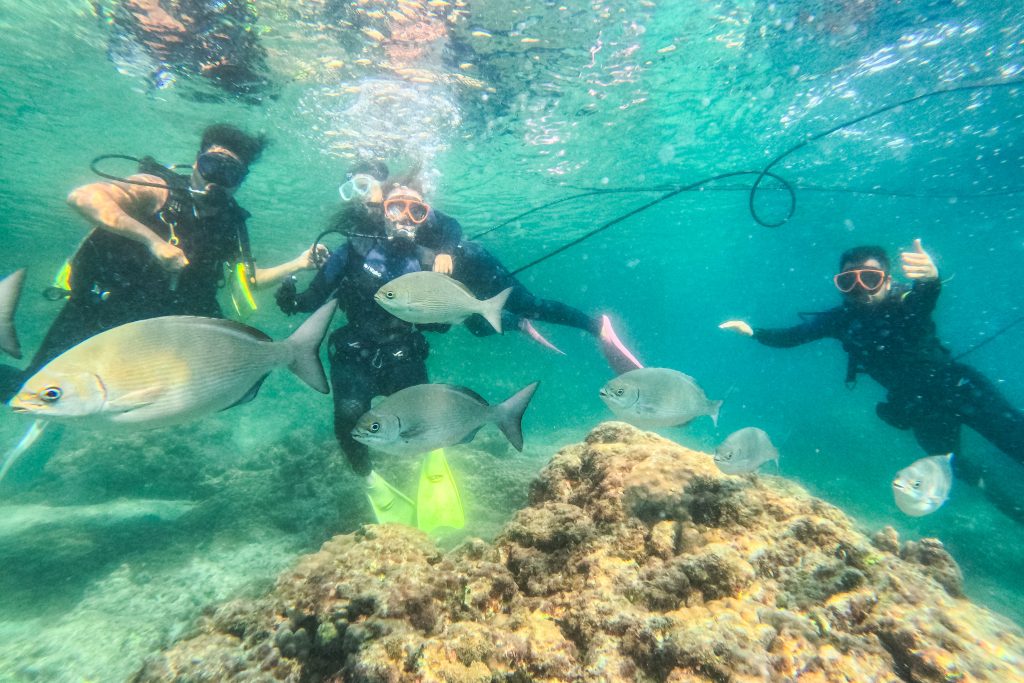
Operated by NINZ Shikinejima, Scuba Light is a simplified diving method that requires no certification—ideal for beginners, families, and even children as young as eight. Instead of carrying a traditional scuba tank, divers breathe through a long hose connected to a floating raft equipped with an air tank, allowing them to explore several meters below the surface without heavy gear or formal training.
All equipment—masks, fins, and wetsuits—is provided, and experienced instructors guide participants through Shikinejima’s vibrant underwater world. The water is crystal clear, teeming with fish in every imaginable color and pattern. It’s a one-of-a-kind island experience that stays with you long after you resurface.
Swimming at Tomari Beach
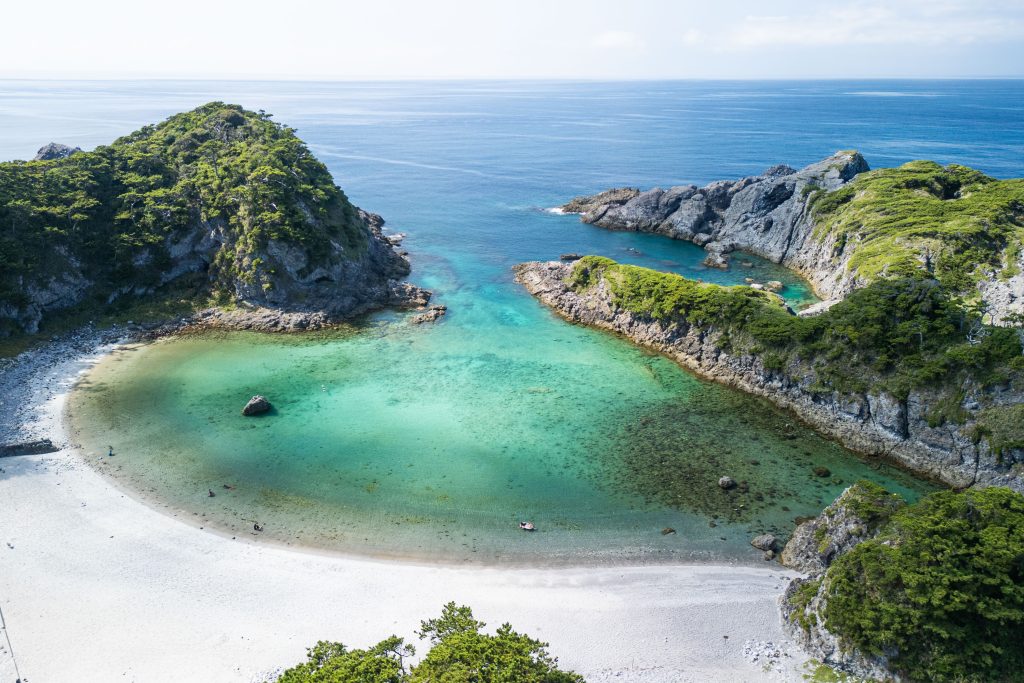
Tomari Beach, on the island’s northern side, is a picturesque cove known for its gentle, wine-glass-shaped curve and crystal-clear, shallow waters. Sheltered by the surrounding hills, its calm seas make it especially popular with families—perfect for swimming, snorkeling, or simply relaxing in the sun.
Beneath the surface, colorful fish flit between rocks, making this one of Shikinejima’s best snorkeling spots. On shore, the soft sand and tranquil views create a peaceful retreat that invites you to slow down and stay awhile.
As evening falls, Tomari transforms once again. Thanks to Shikinejima’s minimal light pollution, the night sky bursts with countless stars, making this one of the island’s best places for stargazing. Whether day or night, Tomari Beach perfectly embodies the island’s natural charm.
Sky
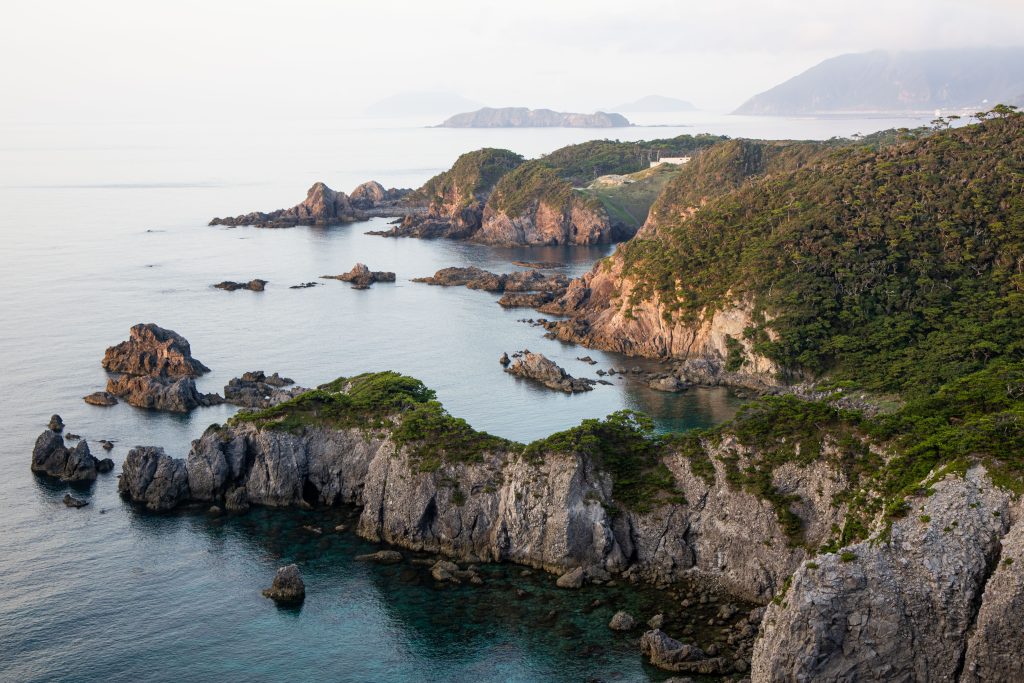
Looking to the sea and the stars
On Shikinejima, the sky feels almost within reach—especially from its highest peaks, where the sea breeze carries the scent of salt and pine. From the panoramic vistas at Gunjiyama Observation Deck where hikers are rewarded with sweeping views of the ocean and neighboring islands, to the tranquil Mikawa Bay Lookout on the eastern coast, perfect for sunrise or sunset, the island offers a wealth of unforgettable viewpoints.
For those seeking solitude, the Ashijiyama Observation Deck on the southern slopes provides a peaceful retreat, ideal for quiet stargazing and reflection. From each of these vantage points, the island unfolds in every direction, the Pacific stretching endlessly beyond the shoreline and shifting in hues of blue as the day passes. Every lookout has its own personality—some serene and sheltered, others wild and dramatic—but all share one defining trait: they reveal the island’s raw, breathtaking beauty, making them essential stops for nature lovers and photographers alike.
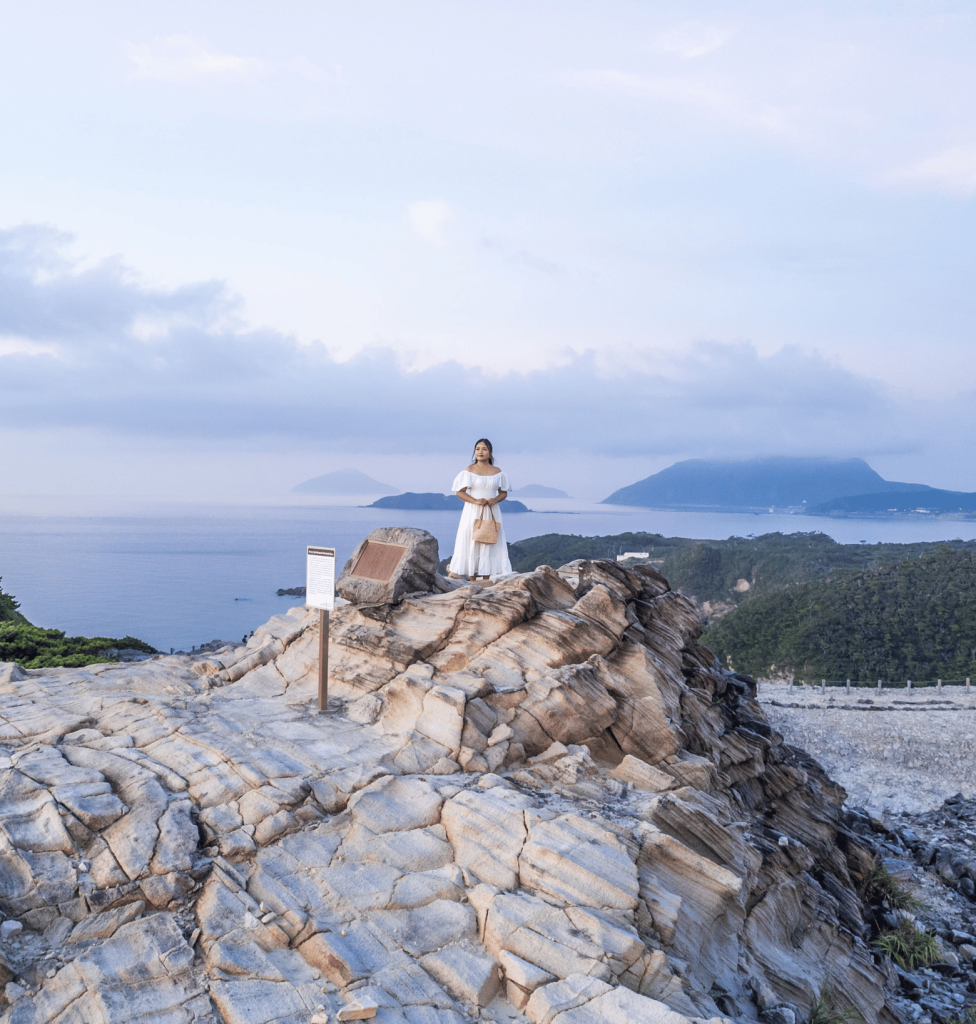
Kanbiki Observatory
Perched on Shikinejima’s northeastern side at 99 meters above sea level, Kanbiki Observatory is both one of the island’s highest points and its most celebrated viewpoint. Arriving here feels like stepping into a 360-degree postcard panorama. From the deck, the coastline stretches out in every direction, revealing hidden coves, rugged cliffs, and the island’s beautifully intricate shoreline below.
On a clear day, you can see Oshima, Niijima, and Kozushima, and even the Izu Peninsula—where the faint silhouette of Mt. Fuji sometimes appears on the horizon. It’s the kind of view that makes you pause and simply take it all in. The observatory’s well-kept viewing deck encourages you to linger, snap photos, and soak in the scenery—one of those rare places where the island’s majesty truly sinks in.
Sacred Sites
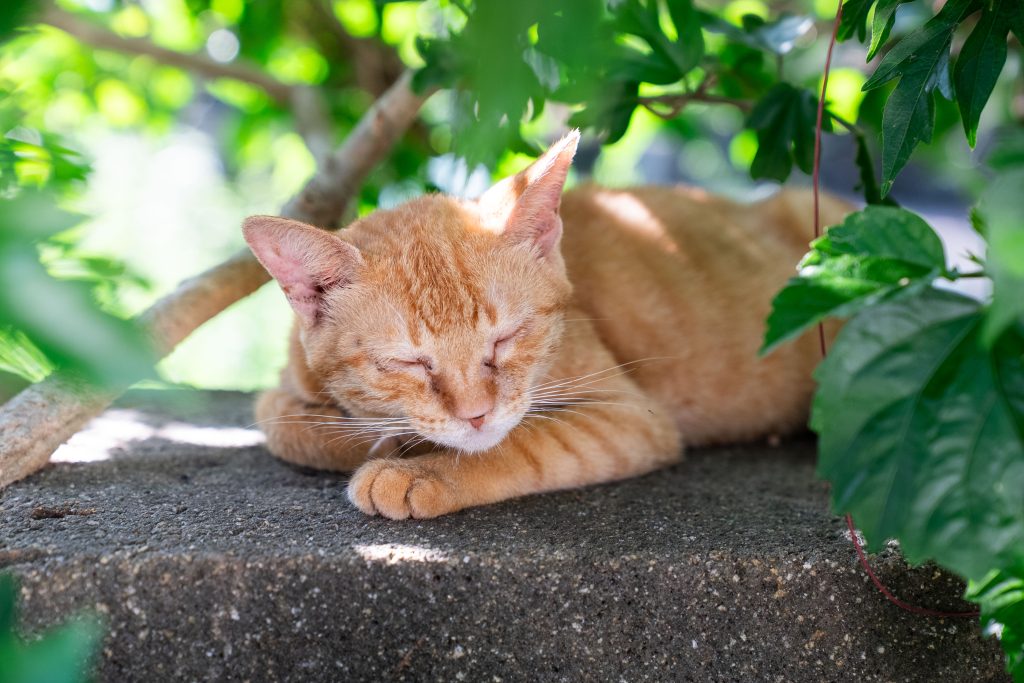
Daio Shrine and Shikinejima’s Cultural Connection to Cats
Beyond its geothermal wonders, what truly sets Shikinejima apart from its neighboring islands is its deep-rooted cultural connection to cats. Today, the island is a haven for feline lovers, where cats thrive peacefully alongside human residents. They’re an inseparable part of daily life—lounging lazily in shop entrances, wandering temple paths, and greeting visitors with quiet curiosity. But it wasn’t always this way. According to local legend, cats were once considered bad luck. The story tells of a bakeneko—a supernatural cat spirit—that was said to abduct children. After the creature was defeated by a samurai from the Heike clan in the 12th century, islanders avoided keeping cats for generations, fearing a return of misfortune.
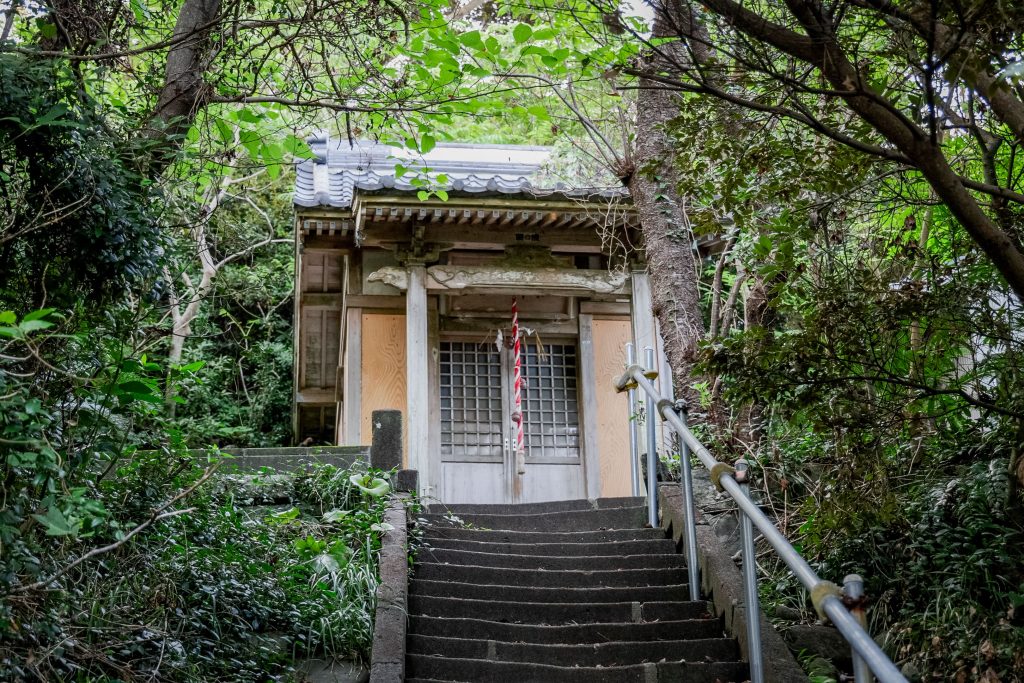
The island’s relationship with cats began to change in 1887, when settlers from neighboring Niijima reintroduced cats to control a growing rat problem. Around the same time, Daio Shrine was established, enshrining a feline deity believed to protect the island from misfortune. Today, the cats roam freely and contentedly—seen lounging in alleys, basking on shrine steps, or weaving between visitors’ legs.
Daio Shrine stands as a symbol of Shikinejima’s enduring harmony between people, nature, and its beloved feline residents—a living link between the island’s myths and its modern life.
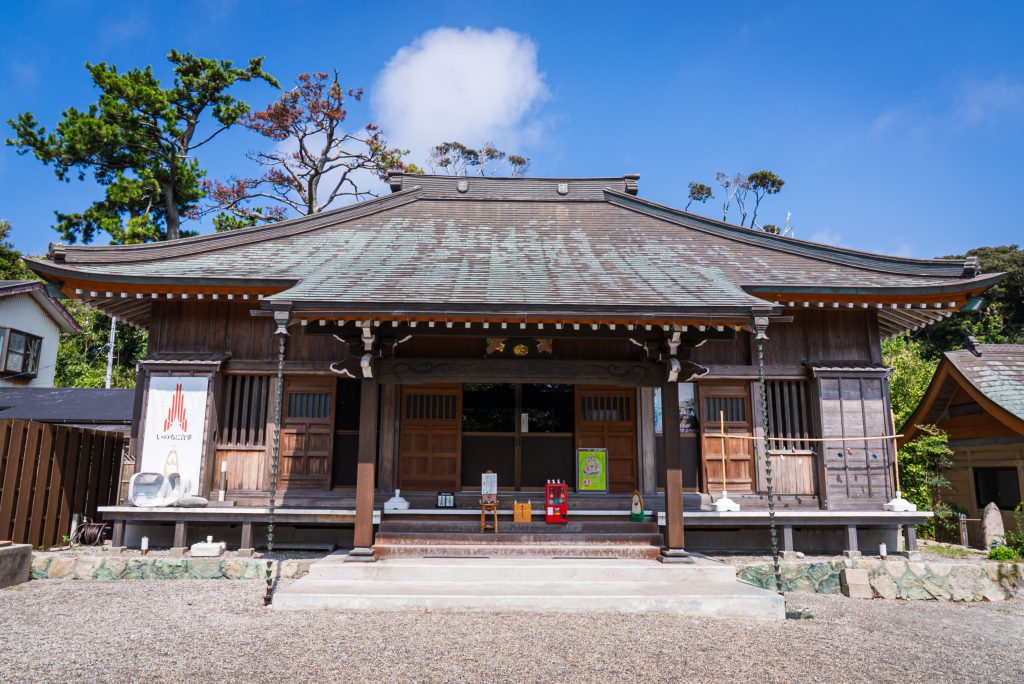
Toyoji Temple and its Sacred Tree
Located in the heart of Shikinejima, Toyoji Temple is a Buddhist temple steeped in history and spiritual calm. Its centerpiece is a towering Buddhist pine—believed to be nearly 1,000 years old—that anchors the temple grounds as one of the island’s most sacred sites. The tranquil surroundings invite quiet reflection and a sense of connection with nature.
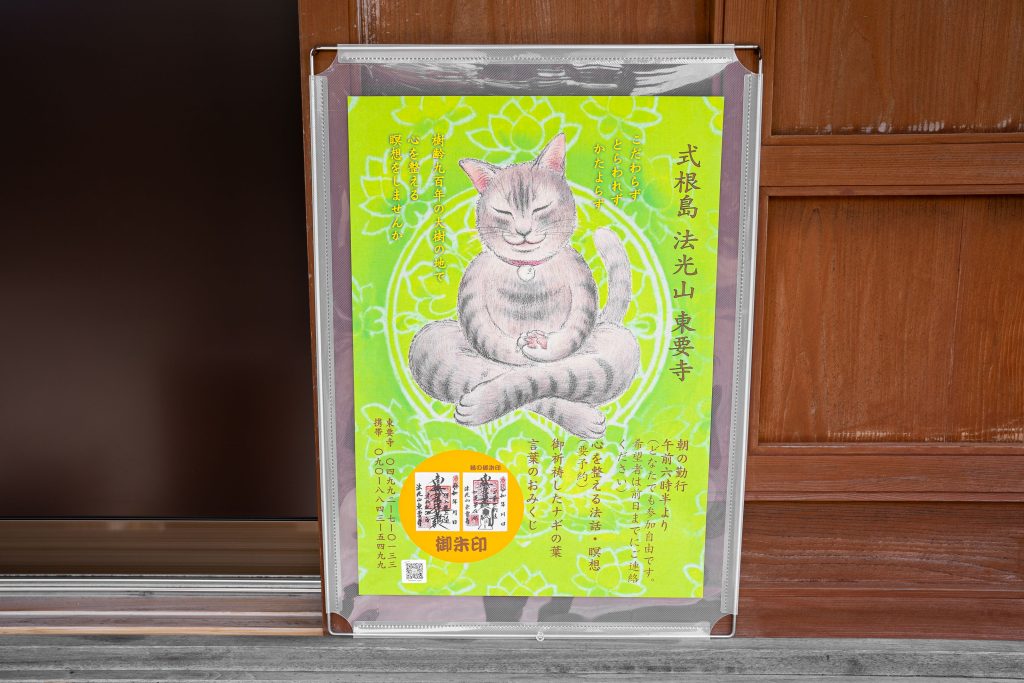
Scattered around the grounds are charming tributes to the island’s feline inhabitants: small cat statuettes, hand-painted signs, and even a tiny cemetery where beloved cats of the past are laid to rest.
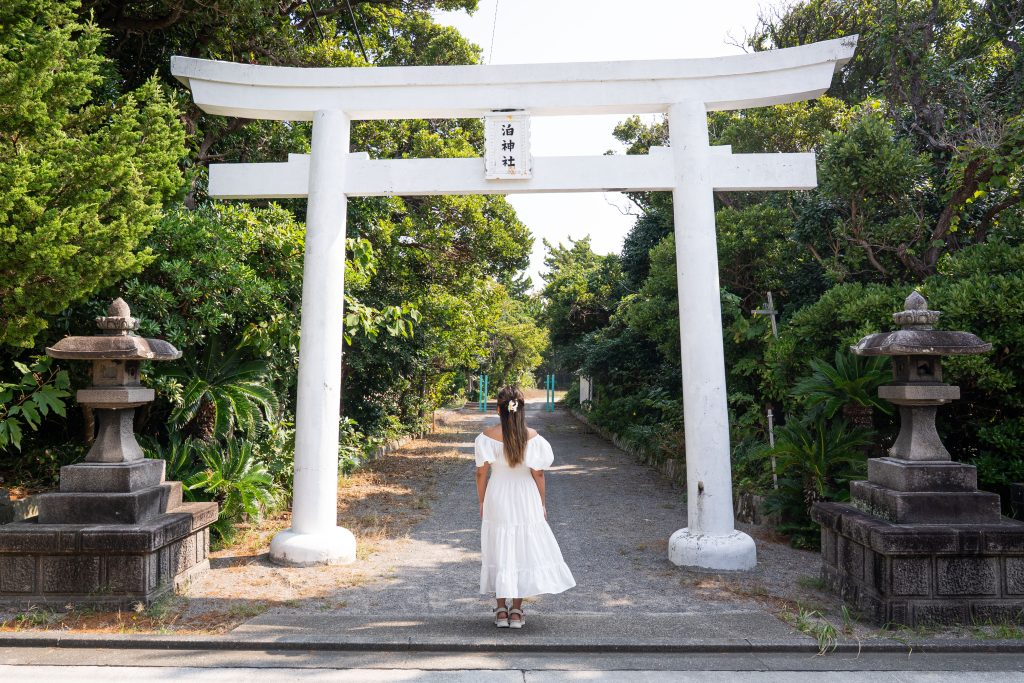
Tomari Shrine’s Local Historical Significance
Situated near Tomari Beach, Tomari Shrine is the largest and one of the oldest Shinto shrines on Shikinejima. Dedicated to Kunitsuhimenomiko, the founding deity of Tokyo’s seven closest islands, it was originally established in 1687 and later relocated to its current site in 1901, taking its present name in 1951.
Hidden behind thick greenery, the shrine’s striking white torii gate stands out against the landscape and can be spotted easily from the roadside. Though not dedicated to cats, Tomari Shrine still has a few feline residents who freely wander the grounds, adding a touch of playfulness to this otherwise sacred place.
Plan Your Visit
Access & Tips for Enjoying Shikinejima
Shikinejima may be small, but its natural beauty runs deep, and its charm lingers long after you leave. Centered around its four treasures—the healing springs, the sea, the sky, and its sacred sites—the island invites you to slow down, breathe deeply, and savor each moment. Shikinejima isn’t just a place to visit; it’s an experience that stays with you.
While preparing for your trip, it’s important to remember that Shikinejima is a small and somewhat remote island, and a visit requires careful planning. Here are a few tips to help you make the most of your journey:
Access & Transportation
Shikinejima can be accessed via an overnight ferry (approximately 9 hours) or a jet ferry (2 hours, 20 minutes), with the latter departing twice a day from Tokyo Takeshiba Terminal (see detailed times and modes here).
After arriving, the best way to get around the island is by car, as steep terrain makes bicycling difficult (though not impossible) in some areas. Bicycles are also available for visitors who want a simple mode of transport to and from their accommodation to the beach. For more information on local rental companies, see here.
When to Visit
Shikinejima welcomes visitors year-round. However, many stores and attractions are closed or operate at irregular hours outside the island’s summer peak season, particularly from April to September. Please note that ferries and flights may be delayed or canceled due to high winds or rough seas, and some businesses shorten their hours or close during the rainy season or winter. Checking forecasts and confirming hours in advance is always a good idea.
Diving and Snorkeling
The beaches where you can swim and snorkel extend beyond those introduced in this article, and activity gear is available for rent on the island’s Shikine Hondo Avenue. Tours often sell out during the peak season, so be sure to book in advance.
*For a full list of providers, see the Shikinejima Tourism Association official website. (Please note that the site is in Japanese)
Dining & Activities
As dining options on Shikinejima are limited, please confirm the access, locations, and business hours of establishments well in advance. During the island’s peak seasons, restaurants and activities fill up quickly. We recommend that you call and confirm before your trip starts.
Where to Stay
Accommodations on the island are limited, particularly during peak seasons. Be sure to check the access information and book in advance. For a list of recommended stays, see here.
GET TO KNOW Shikinejima