
The 10 Colors of Hachijojima: The Closest to Central Tokyo Tropical Island
Every experience on Hachijojima has its color.
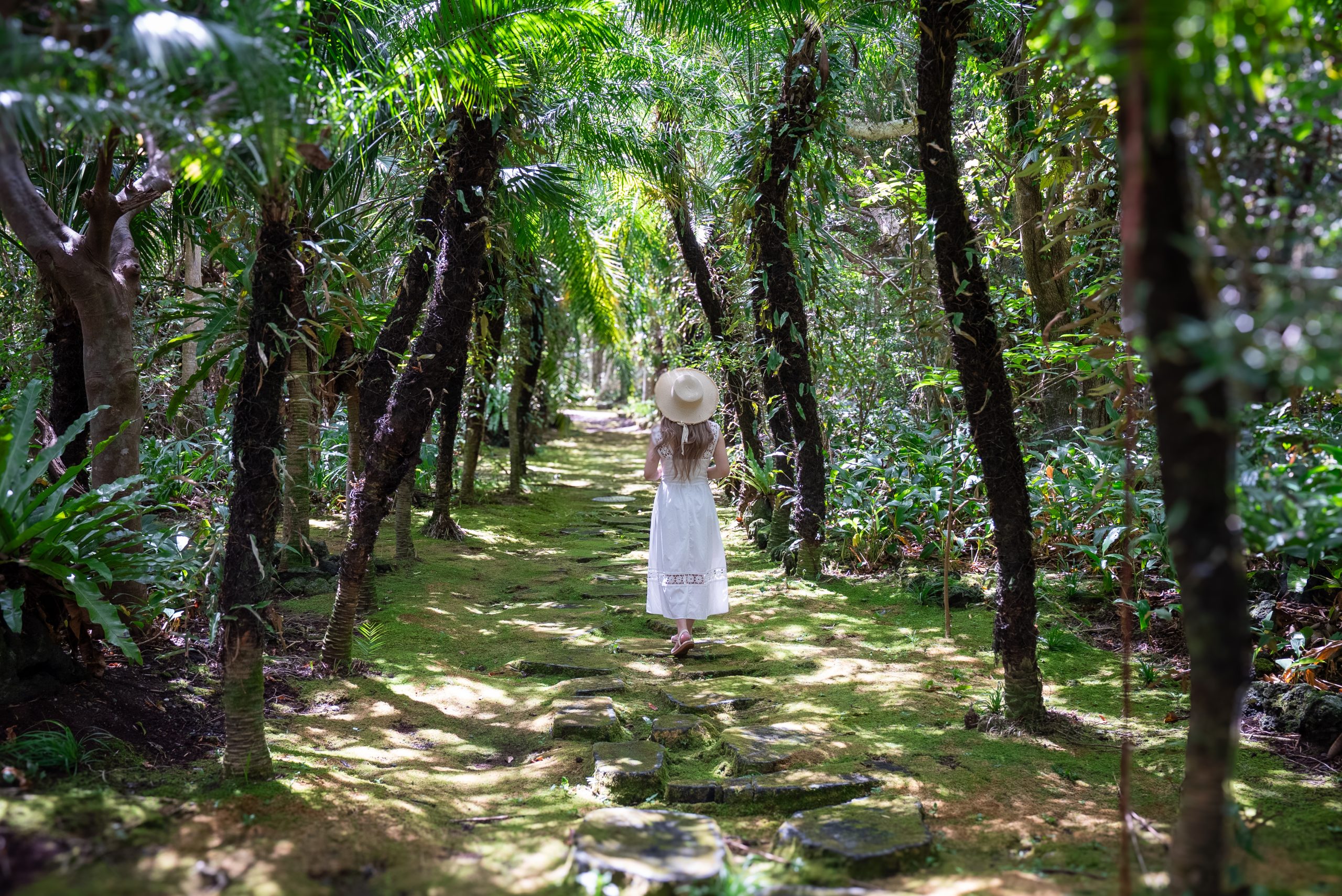
It’s rare to choose a destination for its colors—especially in big cities, where shades often fade into the gray of high-rises and crowded streets. But on Hachijojima, one of the first things you notice is how vivid this Tokyo island feels, as if each shade tells a story of a place, a tradition, or a way of life. “Hachijo Blue” draws divers and snorkelers into waters alive with tropical fish and sea turtles. Greens reveal themselves in mossy forest paths and botanical gardens. Golden yellows, warm browns, and deep blacks shimmer in the silk of Kihachijo textiles woven by hand for centuries. White shines in the creamy milk of the island’s dairy farms, while red captures the spirit of its festive dishes and culinary traditions. And as day gives way to night, the horizon glows with shades of pink, orange, and purple, painting some of the most captivating sunsets near Tokyo.
Yet for all its vivid colors and unhurried rhythm, Hachijojima is far easier to reach than its tropical atmosphere suggests. Though 290 kilometers from central Tokyo, it feels much closer: three daily direct flights from Haneda Airport reach the island in just 55 minutes. Hachijojima is also the second-largest of Tokyo’s 11 islands and undeniably one of the richest in culture, nature, and year-round activities, blessed with a subtropical climate characterized by warm summers and mild winters. Together, these features set the stage for a slower, more colorful kind of journey.
Hachijo Blue: Beneath the Island’s Clear Horizon
The first thing most travelers are awed by in Hachijojima is the island’s dazzling “Hachijo Blue”—waters so clear and vibrant that they seem to stretch endlessly beneath the horizon. Fed by the warm Kuroshio Current, the sea here shimmers with life: schools of colorful tropical fish, lava-formed seascapes, and, most famously, graceful sea turtles that appear so often that the island is nicknamed “the sea turtle island.”
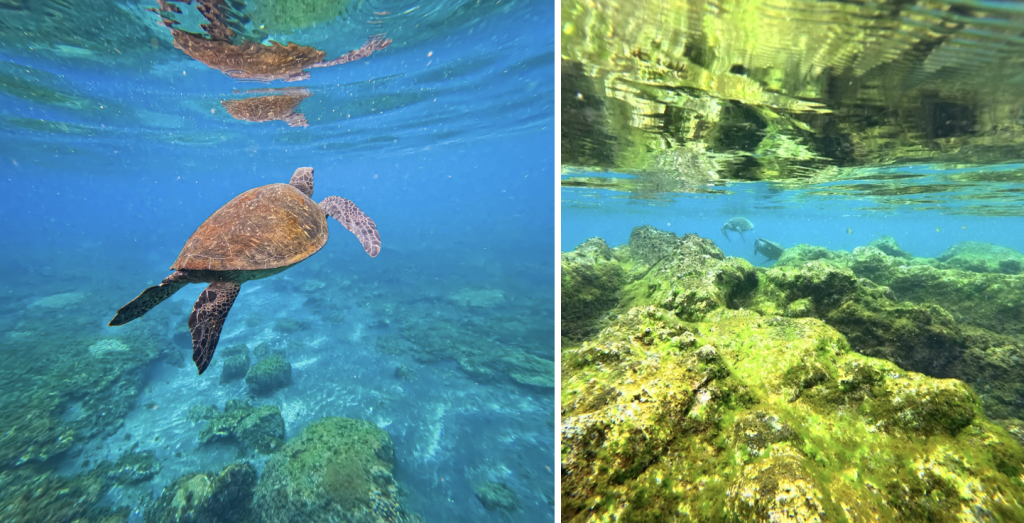
You can explore this infinite blue world in many ways, but snorkeling close to shore or joining a guided dive with one of the island’s many marine sports operators are the most popular. Even first-timers can try a relaxed dive without a license, with everything from equipment to underwater cameras provided. For those who prefer to wander at their own pace, renting snorkeling gear from local diving shops—or even accommodations—makes it easy to slip into the water whenever the mood strikes. One of Hachijojima’s greatest allures is how easily wildlife encounters come here: at almost any beach, there is a strong chance of swimming alongside sea turtles or seeing fish in their natural habitat, no matter where you choose to enter the water.
On our recent visit, we rented snorkeling gear from Diving Base Breeze and headed straight to the nearest beach, planning to spend a few leisurely hours searching for sea turtles. But within just ten minutes of entering the water, we were surrounded by a flurry of tiny fish—and then, two sea turtles appeared, gliding gracefully through the transparent blue. They came so close, almost within arm’s reach, as if to greet us, before slowly disappearing into the depths. The encounter was fleeting yet unforgettable—one that left us with a sense of quiet awe and a lasting connection to this incredible island.
However you choose to explore the Hachijo Blue, don’t rush it. Float above volcanic reefs, follow the fish through their shimmering world, and watch the turtles glide past as if time itself has slowed—the blue here is an experience that can fill an entire day.
Hachijo Green: Forest Paths and Botanical Wonders
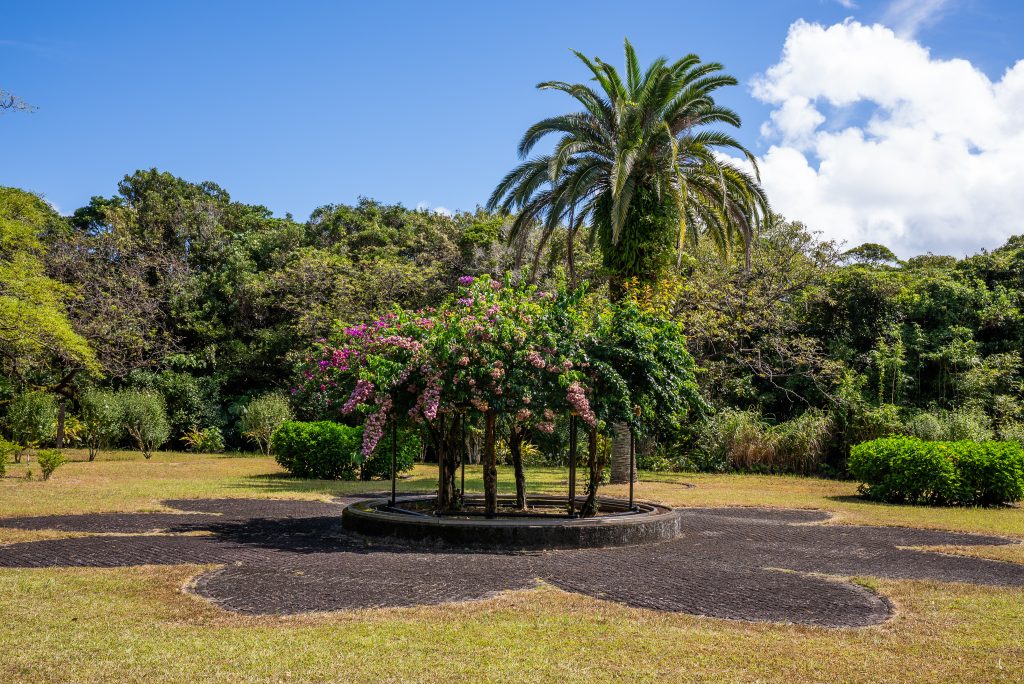
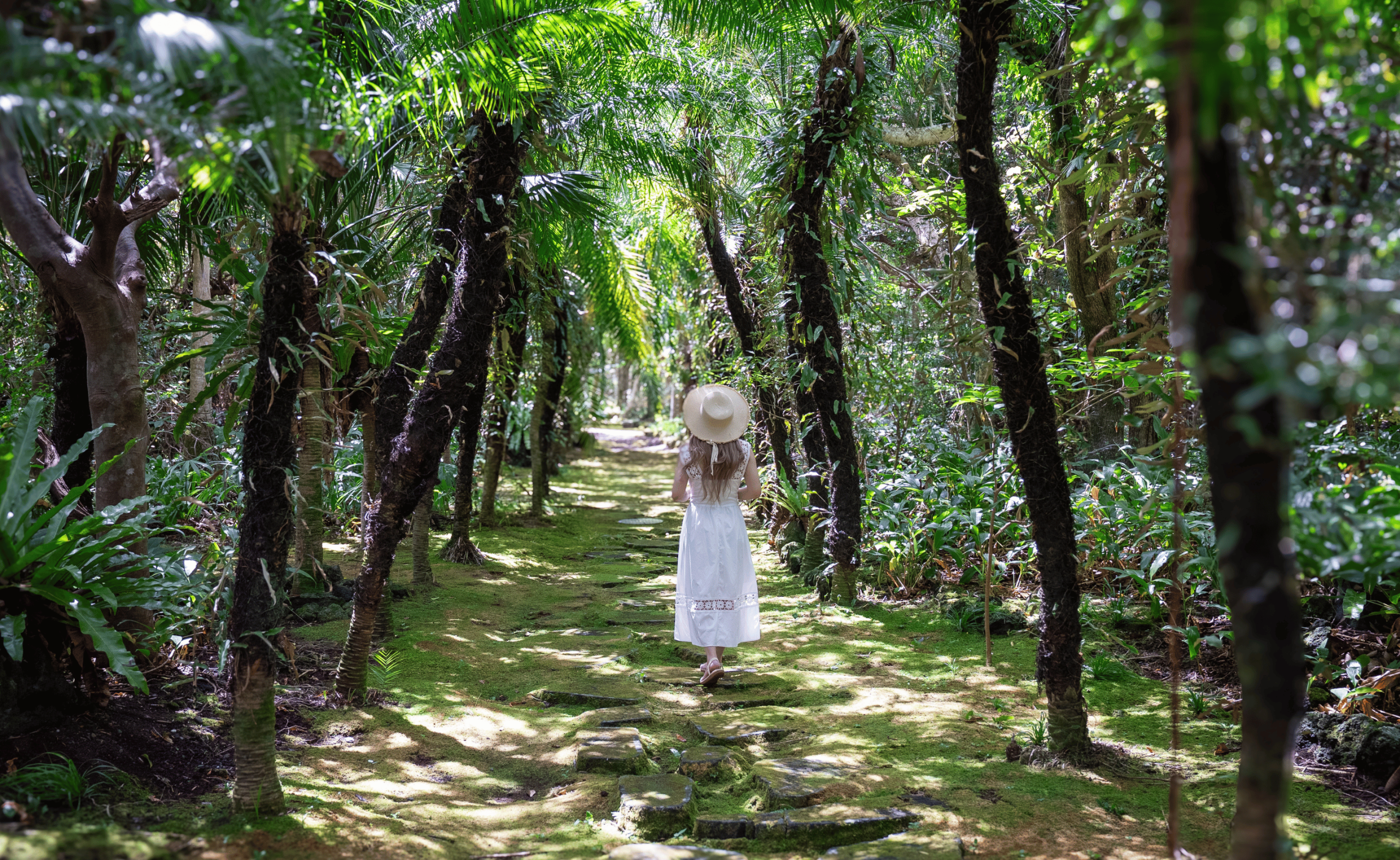
Where the blue ends, the island turns green—in forests, mossy paths, and abundant flora. If Hachijo Blue belongs to the ocean, then Hachijo Green is the color of everything that grows and thrives on the island. Formed by the merging of two volcanic peaks, Mt. Hachijo-Fuji and Mt. Mihara, Hachijojima is veined with forests and winding trails that invite unhurried exploration. Thanks to its warm, subtropical climate, plants—from hibiscus to the island’s signature Phoenix roebelenii palm—flourish here.
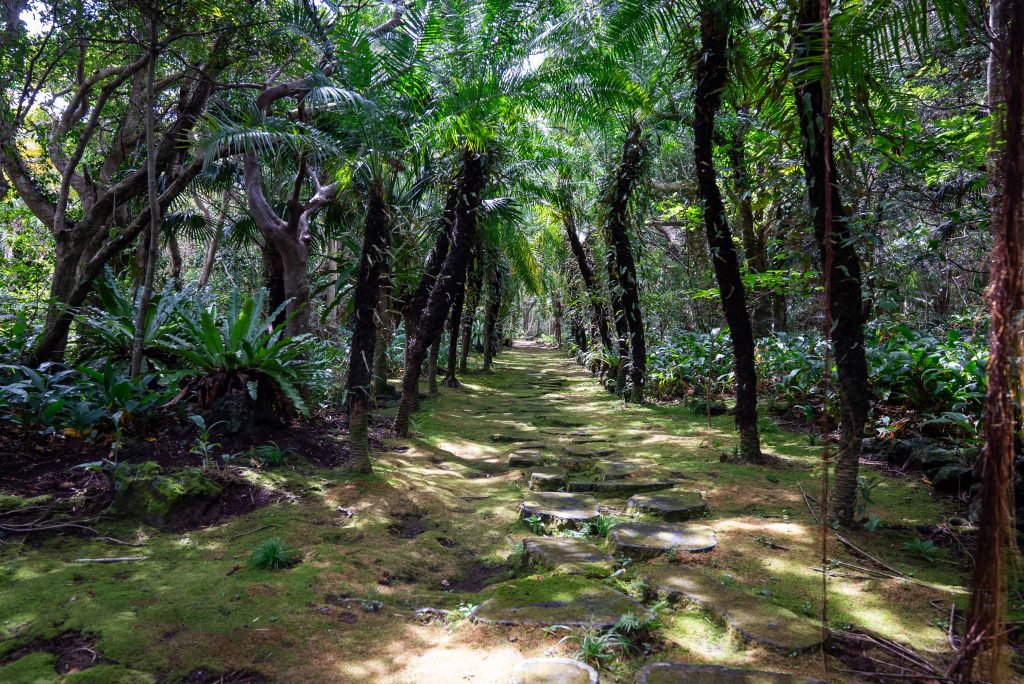
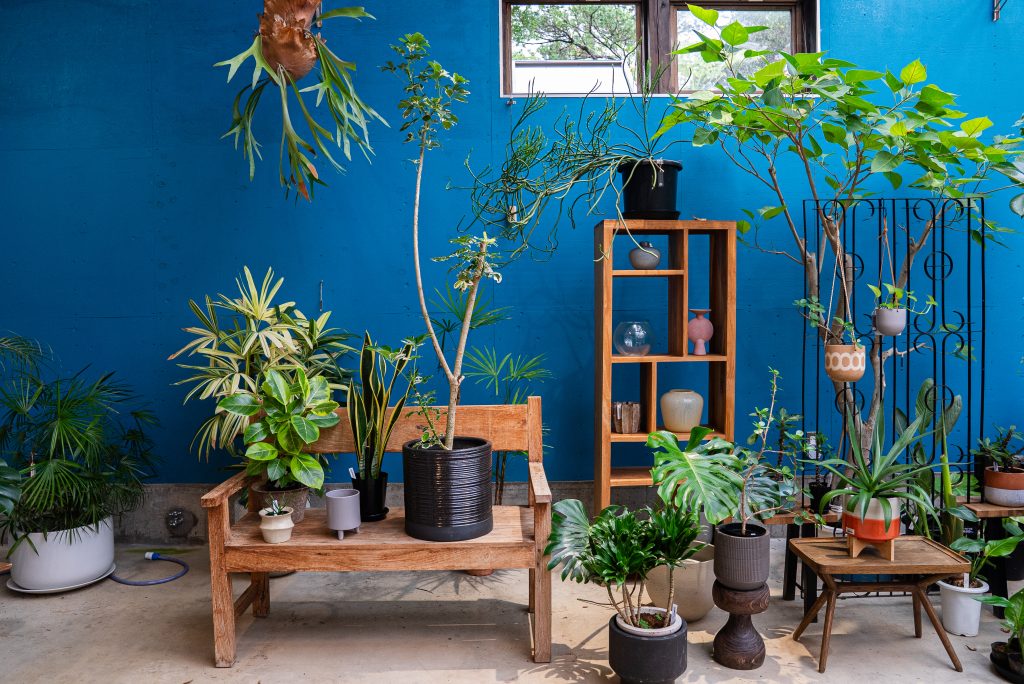
Just minutes from the airport, Hachijo Botanical Garden* offers an inviting gateway into the island’s remarkably diverse plant life. Divided into themed zones and a greenhouse filled with hibiscus, papaya, bananas, and even coffee trees, the garden is especially known for its moss-covered paths. When sunlight filters through the canopy, these emerald trails feel almost otherworldly—quiet, dreamlike, and deeply calming.
Nearby, Hachijojima Botanical & Cafe DRACO blends greenery with a slow-paced island lifestyle. Part botanical shop, part cafe, the space was created to share the island’s horticultural traditions in an accessible, relaxed setting. Visitors linger over island-inspired drinks and desserts, browse tropical plants for sale, and often leave with a favorite plant in hand—a living reminder of Hachijojima’s deep green spirit.
Another way to fully immerse yourself in Hachijojima’s nature is through outdoor yoga sessions that use the island itself as the setting. Yuko Yoga, founded in 2003 by nature yoga therapist Yukiko Tamai, takes place at scenic locations across the island chosen for their openness and calm. Tamai moved to Hachijojima more than 23 years ago after falling in love with its slower rhythm, and that sensibility shapes each session.
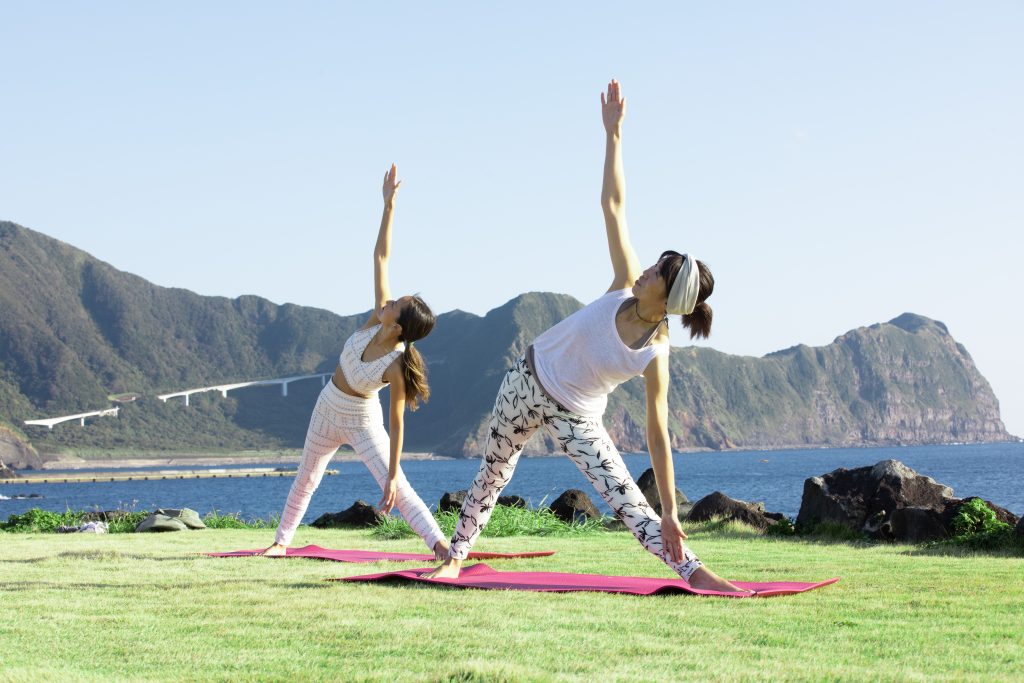
Yuko Yoga’s tours range from a few unhurried hours to half-day or full-day retreats, but the structure remains intentionally simple: a yoga mat laid out on open ground, and time to move and pause without a schedule pressing in. As the session progresses, attention naturally shifts to the surroundings—the small luxuries most of us overlook in daily life: the steady sounds of the ocean and forests, wind moving across the skin, the scent of grass and sand underfoot. Set against the island’s natural landscapes, the experience feels grounding and quietly refreshing.
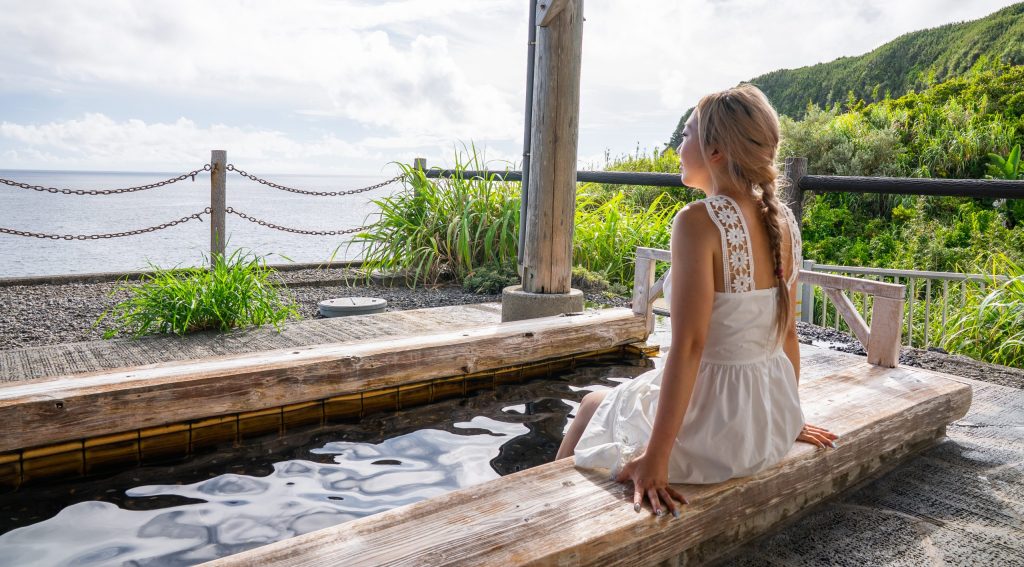
Some tours conclude with a visit to Kirameki**, an open-air seaside foot spa where, on clear winter days, whales may be spotted on the horizon. Sitting quietly with your feet warmed by spring water and your gaze fixed on the open sea, it becomes easy to feel renewed—reconnected to both nature and the slower pace that defines life on Hachijojima.
* Please note that some areas of Hachijo Botanical Garden remain under repair due to damage caused by the 2025 typhoon. Check the official website for the latest updates before visiting.
** Due to typhoon-related damage, Kirameki Foot Spa is currently operating without a roof or electrical facilities until further notice.
Hachijo White: Yuyu Dairy Farm and Fresh Jersey Milk
Amid all this greenery, one of the island’s gentlest sights is unexpectedly white: cows grazing peacefully under the sun. On a hill overlooking the Pacific, the cows at Yuyu Dairy Farm graze lazily under the sun, their calm presence matching the island’s gentle rhythm. This free-range farm, run by Hachijo Dairy Industry Inc., is the last keeper of a tradition that once earned the island the name “dairy kingdom.” In the 1960s, Hachijojima’s pastures supported thousands of cows and a condensed milk factory that supplied school lunches across Tokyo. Today, only about forty Jersey cows remain, but they live in a paradise of clean air, volcanic soil, and abundant grass, producing milk prized for its rich, creamy taste.
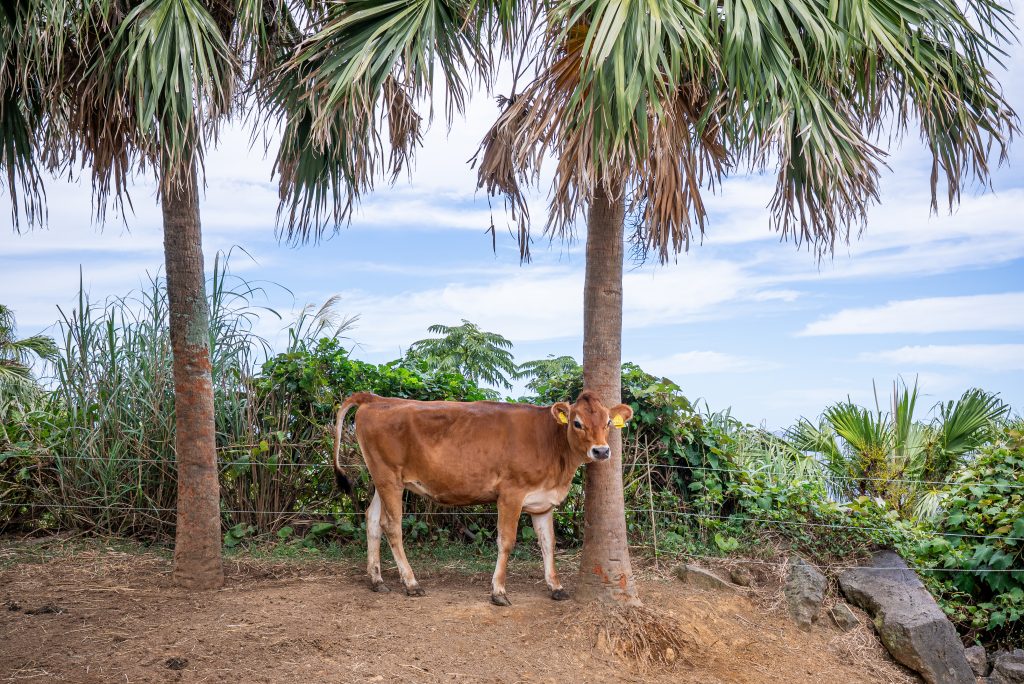
Visitors can pause at the farm’s lookout to take in the vast horizon, where ocean, pasture, and sky blend into a single canvas of white and blue. Those who stay at the neighboring Lido Park Resort Hachijojima, owned by the same company as the farm, and rise early can even join morning milking activities.
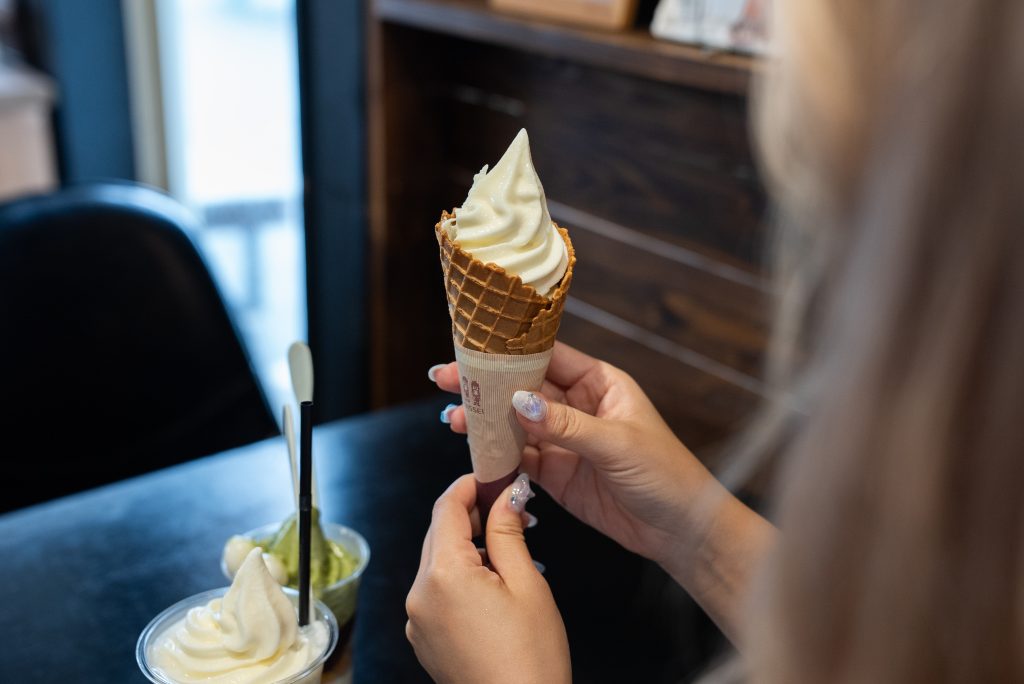
And for anyone with a sweet tooth, the farm’s milk is transformed into milky gelato at Gelateria365 and soft-serve, cheesecakes, puddings, floats, and everything delicious in between at the Jersey Cafe—delicious treats that capture the essence of Hachijojima in every bite.
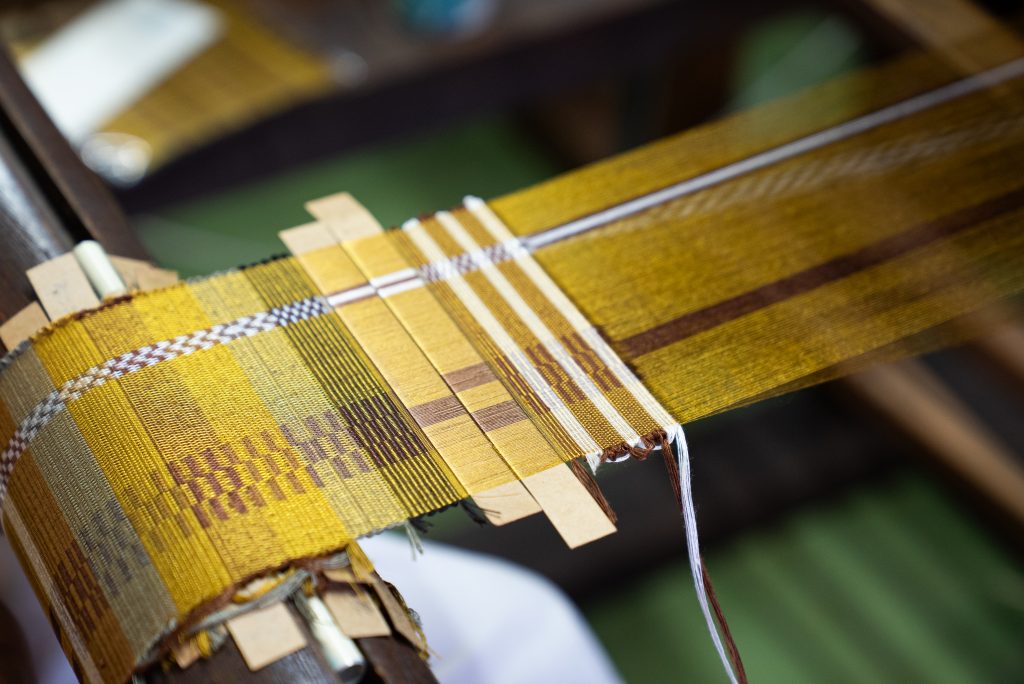
The Yellow, Brown, Black “Kihachijo”: Traditional Textiles and Crafts
But not all colors here come from nature—some are woven by hand, passed down through centuries of craft. For more than 800 years, the people of Hachijojima have been weaving the island’s landscape into silk. Known as Kihachijo, these textiles glow in three deep shades: a sunlit yellow from kobuna grass, a warm reddish-brown from madami bark, and a lustrous black from oak. Hand-dyed with natural pigments on the island, the silk shimmers with a sheen said to last for generations. In the Edo period, it was the height of fashion, draped across the streets of the capital, admired for its supple feel and timeless glow. Today, Kihachijo continues to evolve, its traditional checked patterns joined by modern touches—ties, wallets, and accessories that carry a piece of the island’s palette into contemporary life.
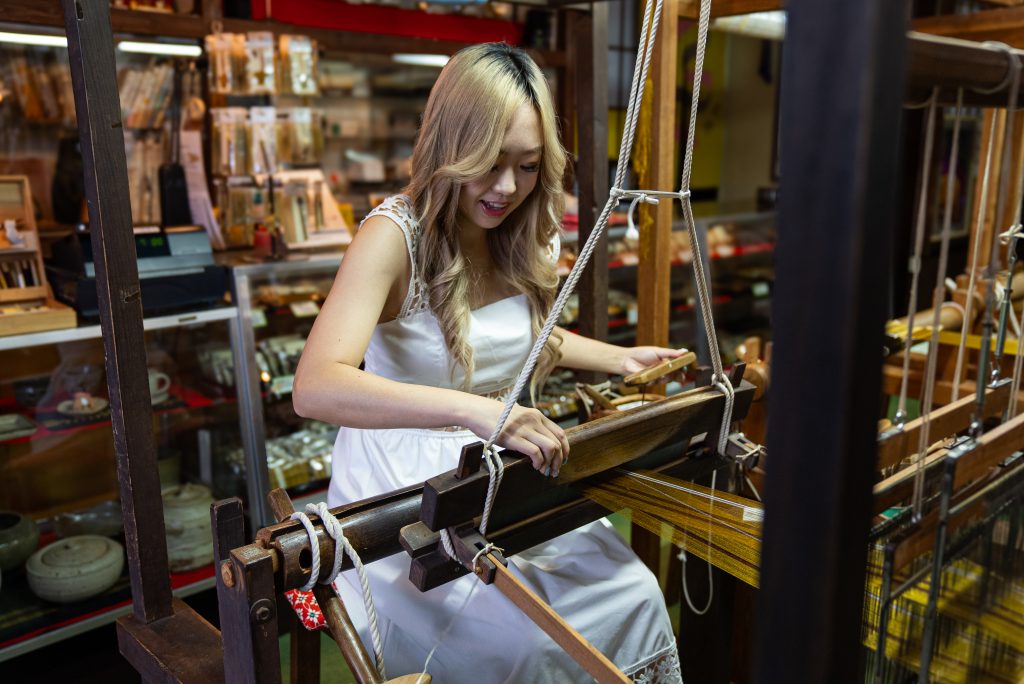
At the Hachijo Mingei Yamashita atelier, visitors can step behind the loom themselves. The workshop begins simply, with a short length of silk thread. But soon your feet are tapping at the pedals of a wooden loom, following the rhythm artisans have kept for centuries. In an hour, you create a small coaster—just a fragment of cloth, yet enough to feel the care and patience woven into every centimeter of Kihachijo. Once finished, the coaster is polished by the friendly staff, carefully packaged, and sent to your home, usually within two weeks.
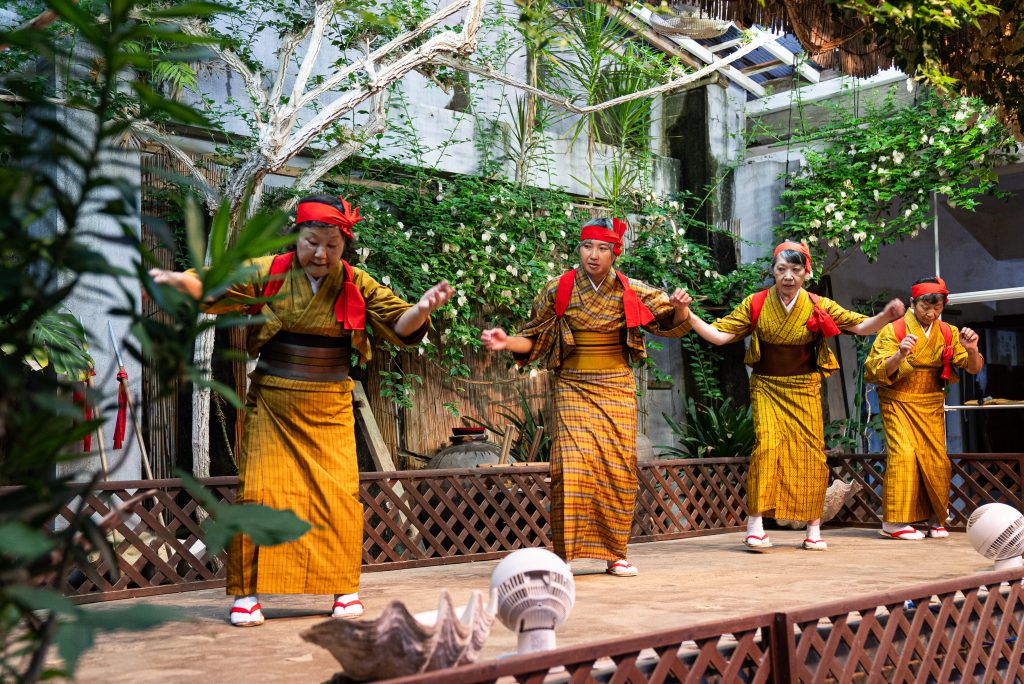
To see the textiles in motion, head south to Hachijo Hattori Yashiki in the Kashidate area of the island. Here, history stirs to life when dancers step onto a stone stage framed by subtropical greenery. Clad in brilliant Kihachijo kimono, they move to the rolling beat of taiko drums, performing songs and dances once shared at village gatherings. Known as the Kashidate dance, this tradition is now preserved as a cultural treasure, and it ends the way island life so often does—with an invitation to join. Guests are welcomed onto the stage, learning the steps side by side, until the dance becomes a shared celebration of community and rhythm.
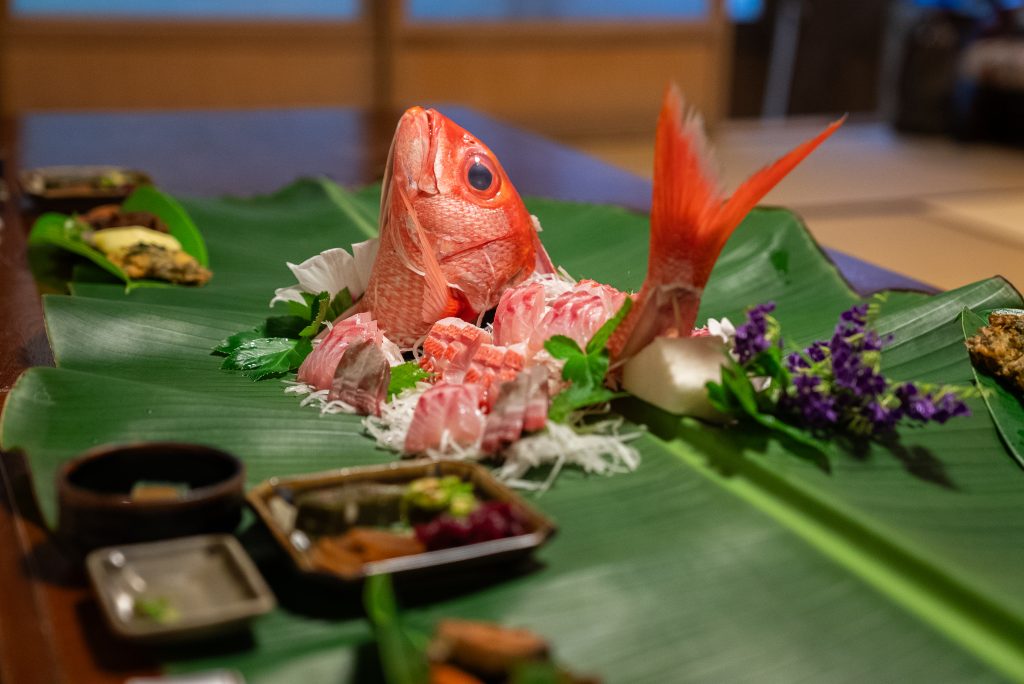
Red: “Goshamen”—Hachijojima’s Festive Cuisine
If textiles tell the island’s story in threads, food tells it in flavor—nowhere more vividly than in the crimson hues of the island’sGoshamen cuisine. Long ago, Goshamen was a prisoner’s festive feast—a celebratory meal prepared for those granted forgiveness and allowed to return from exile. No one knew if the long journey home would be completed, so the table was set with an abundance of gratitude and hope.
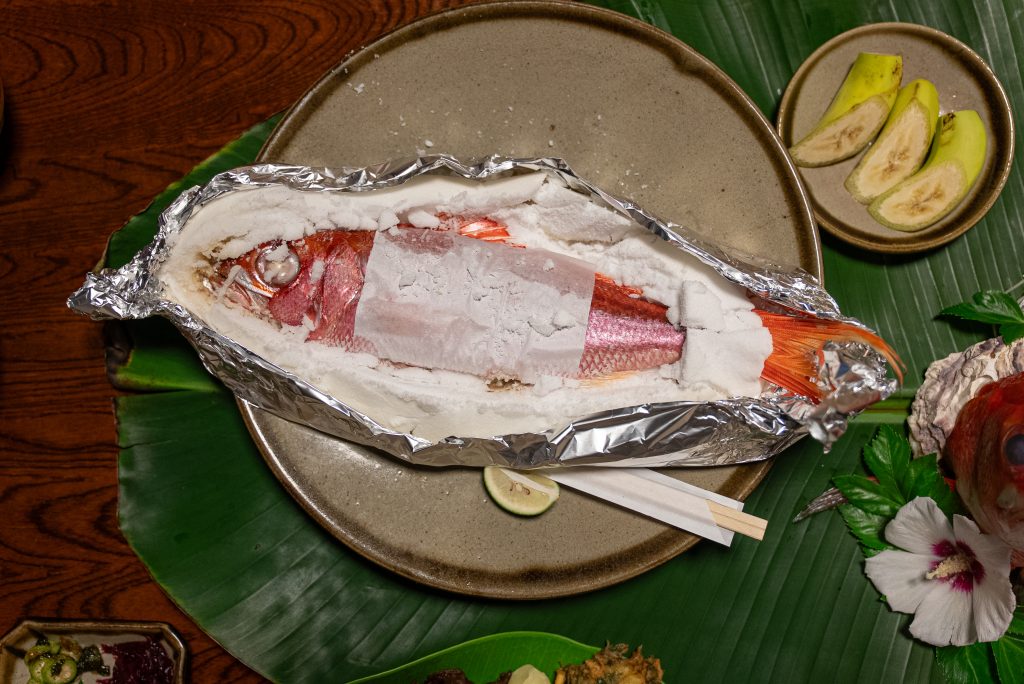
Even today, Goshamen tells that story through its colors and flavors. The dishes are made entirely from the island’s own ingredients: a whole sakuradai (red sea bream) baked in a salt crust and cracked open to reveal its tender flesh; platters of sashimi and fried fish; bowls of comforting barley porridge; crisp tempura made from the island’s famed ashitaba leaves; and tropical fruits—banana, passionfruit, lemon—arranged on a large banana leaf and decorated with island flowers. It is as beautiful to see as it is to taste, a meal that feels both festive and deeply rooted in place.
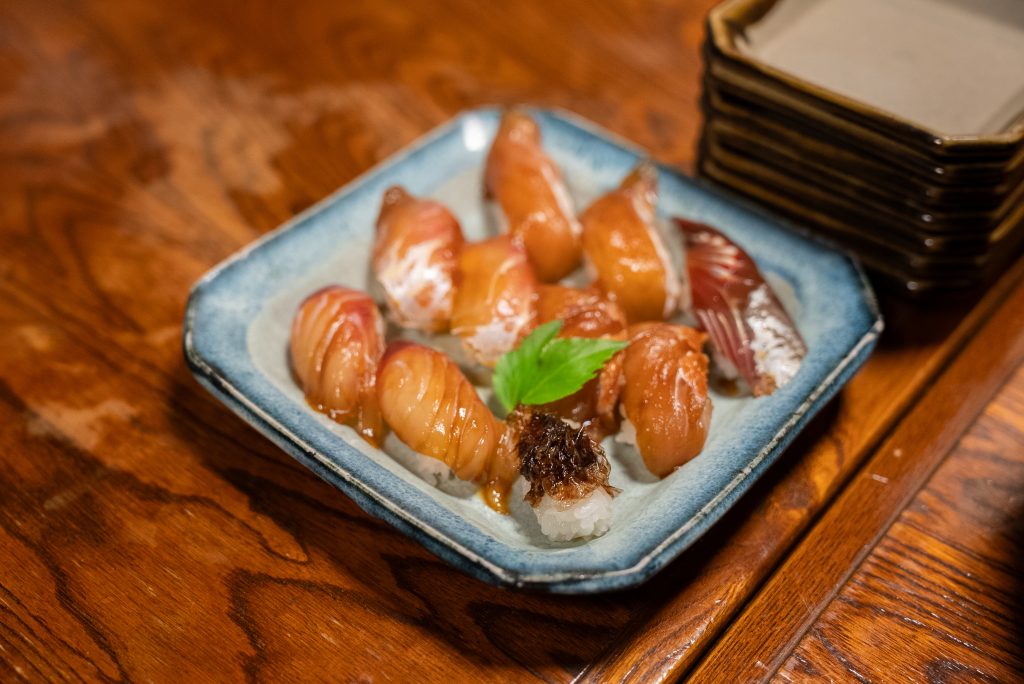
Today, one of the few places to experience Goshamen is Isozakien, where reservations for this luxury feast are essential. Alongside it, the restaurant also serves another island specialty: shimazushi, sushi prepared with mustard instead of wasabi. Once made as a practical snack for long boat journeys, shimazushi is now a beloved household dish and a flavor that instantly connects you to island life. And as day fades, the island saves its most dramatic colors for the sky.
Pink, Orange, and Purple: Hachijojima’s Sunsets
Sunsets may be beautiful everywhere, but on Hachijojima, they feel like a performance written just for the island. As the sun sinks behind the horizon, the sky melts into molten gold, fiery orange, and soft rose, with the dark silhouette of Hachijo-Kojima and swaying palms etched against the glow. From the Hachijo Fuji Fureai Ranch’s observatory deck, the Yokama Coast, or the rocky stretches of Nanbara Senjoiwa Coast, each viewpoint offers the same spectacle told in shifting shades.
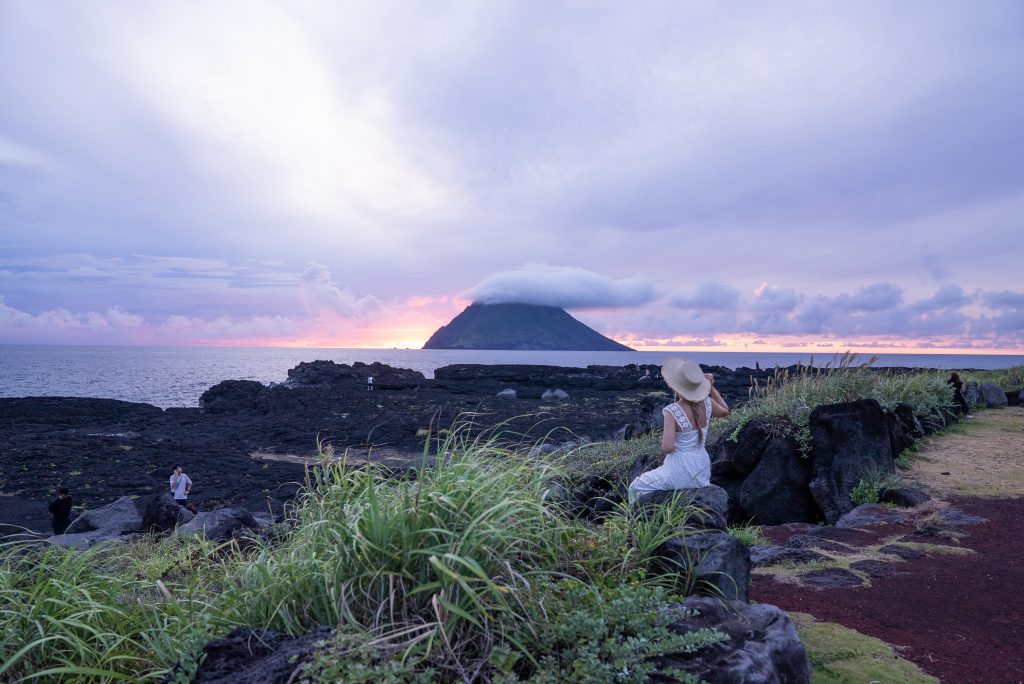
The light changes quickly, yet never feels rushed: warm and hopeful at first, bold as the sun hovers low, and finally tender as day gives way to night. Colors drift from gentle pink and blue to deep purples and brilliant orange before giving way to a star-filled sky. On Hachijojima, even the day’s ending lingers in color, reminding you to pause and watch until the very last light fades.
Plan Your Visit: Access & Tips for Enjoying Hachijojima
With so much to see, taste, and reflect on, Hachijojima is a rare and unforgettable experience. It lures you in, captivates you, and leaves you longing to return. Many residents will tell you they first came from elsewhere in Japan, only to find themselves enchanted by the island’s peaceful landscapes, its slower rhythm, and its sense of space. “I don’t think I can ever go back,” smiles Yukiko Tamai of Yuko Yoga. Hachijojima is that kind of place—you fall in love with it slowly, one color, one shade, one story at a time. When you go, let the island’s colors guide you—blue, green, yellow, red, and purple—each waiting to be discovered at its own unhurried pace.
Nevertheless, it’s essential to keep in mind that the island is indeed far and a visit here requires some planning. Here are a few tips to help you make the most of your visit.
With so much to see, taste, and reflect on, Hachijojima is a rare and unforgettable experience. It lures you in, captivates you, and leaves you longing to return. Many residents will tell you they first came from elsewhere in Japan, only to find themselves enchanted by the island’s peaceful landscapes, its slower rhythm, and its sense of space. “I don’t think I can ever go back,” smiles Yukiko Tamai of Yuko Yoga. Hachijojima is that kind of place—you fall in love with it slowly, one color, one shade, one story at a time. When you go, let the island’s colors guide you—blue, green, yellow, red, and purple—each waiting to be discovered at its own unhurried pace.
Nevertheless, it’s essential to keep in mind that the island is indeed far and a visit here requires some planning. Here are a few tips to help you make the most of your visit.
Access & Transportation
Three daily flights from Haneda Airport reach the island in just 55 minutes, while an overnight ferry (about ten hours) offers a slower approach across the sea. Once on the island, renting a car is the easiest way to explore, though taxis are also available. Hotels and restaurants can assist with arranging them if needed. Transport arranged by your accommodation is also common. Please confirm with your accommodation upon booking.
For more information on local rental car companies, see here.
When to Visit
Hachijojima welcomes visitors year-round, but for ocean sports and natural experiences, April to November offers the best conditions. Spring on the island is gorgeous, too. From late March through early April, the Hachijojima Freesia Festival draws crowds as some 350,000 freesia blossom in splendid spring colors at the base of Mt. Hachijo Fuji, creating one of the island’s most picturesque seasonal highlights.
Please note that ferries and flights may be delayed or canceled due to high winds or rough seas, and some businesses shorten their hours or close during the rainy season or winter. Checking forecasts and confirming hours in advance is always a good idea.
Diving and Snorkeling
The island has numerous marine sports operators, including Ocean Boulevard, Sato Diving Center, and Regulus Diving, which offer guided dives—perfect for first-timers without a diving license. Snorkeling is also easy, with gear available for rent from local shops and accommodations. Tours often sell out during the peak season, so be sure to book in advance. For a full list of providers, see the Hachijojima Tourism Association website.
Dining & Activities
During peak seasons, restaurants and activities fill up quickly. Reservations—or at least a call the day before—are highly recommended.
Money and Language Matters
Cash is still more common than cards, so come prepared. Most services on the island are primarily in Japanese.
Where to Stay
There are numerous accommodations on Hachijojima, ranging from hotels to local Bed and Breakfasts. Always book in advance. For a list of recommended stays, see here.
Activities, Shopping, and Highlights
For more information on the places mentioned in this article, please visit their respective links below. For further suggestions of where to go and what to see, visit the Hachijojima Tourism Association’s website.
For souvenir shopping while on the island, head to Mingei Aki. Alternatively, a well-stocked souvenir shop is available at the airport, but allow yourself enough time as boarding may start earlier. There are no souvenir shops in the gates area.
GET TO KNOW Hachijojima